

Sleep is not a luxury. It is not just “rest.” It is one of the most powerful tools your body uses to repair, recharge, and protect itself. Yet millions of people sleep less than six hours a night. Busy schedules, stress, social media, and late-night work have turned poor sleep into a normal habit.
But here’s the scary truth: sleep deprivation can quietly damage your heart.
Heart disease is already one of the leading causes of death worldwide. While many people focus on diet and exercise, they often ignore sleep. However, lack of sleep affects blood pressure, cholesterol, blood sugar, inflammation, and even heart rhythm.
In this in-depth guide, we’ll explore:
- How sleep deprivation affects your heart
- Why poor sleep increases the risk of heart disease
- The connection between insomnia, stress, and heart problems
- Signs your heart may be suffering
- Practical ways to protect your heart by improving sleep
Let’s uncover what really happens when you don’t get enough sleep.
What Counts as Sleep Deprivation?
Sleep deprivation means not getting enough quality sleep on a regular basis.
Recommended Sleep by Age
| Age Group | Recommended Hours of Sleep |
|---|---|
| Teenagers (14–17) | 8–10 hours |
| Adults (18–64) | 7–9 hours |
| Older Adults (65+) | 7–8 hours |
If you consistently sleep less than 6 hours per night, your body enters a stress state. Over time, this harms your heart health.
Sleep deprivation can include:
- Sleeping too few hours
- Waking up many times during the night
- Poor-quality sleep
- Shift work sleep disorder
- Chronic insomnia
- Untreated sleep apnea
All of these can increase the risk of heart disease.
Why Your Heart Needs Sleep
Your heart does not stop working when you sleep. But during healthy sleep:
- Heart rate slows down
- Blood pressure drops
- Stress hormones decrease
- Blood vessels relax
- The body repairs damaged tissues
This nightly “reset” protects your cardiovascular system.
When you don’t sleep enough, your body misses this repair window.
1. High Blood Pressure: The First Warning Sign
One of the strongest links between sleep deprivation and heart disease is high blood pressure (hypertension).
How It Happens
When you don’t sleep:
- Your body releases more stress hormones (like cortisol)
- Your nervous system stays active
- Blood vessels remain tight
- Blood pressure stays elevated
Normally, blood pressure dips at night. This is called “nocturnal dipping.” Without enough sleep, this dip doesn’t happen.
What This Leads To
- Increased strain on the heart
- Damage to arteries
- Higher risk of stroke
- Higher risk of heart attack
People who sleep less than 6 hours are more likely to develop chronic hypertension.
2. Increased Risk of Heart Attack
Sleep deprivation increases inflammation in the body. Inflammation damages blood vessels and makes plaque build up inside arteries.
The Chain Reaction
- Poor sleep raises stress hormones
- Stress increases blood pressure
- Blood vessel walls become damaged
- Plaque builds up in arteries
- Arteries narrow
- A clot forms
- Heart attack occurs
Even one night of poor sleep can temporarily affect blood vessel function.
3. Irregular Heartbeat (Arrhythmia)
Lack of sleep can disturb your heart rhythm.
Your heart works under control of the autonomic nervous system. Sleep helps balance this system. When you’re sleep-deprived:
- Adrenaline increases
- Heart rate stays elevated
- Electrical signals in the heart become unstable
This may lead to:
- Palpitations
- Atrial fibrillation
- Irregular heartbeat
Atrial fibrillation is especially dangerous because it increases stroke risk.
4. Sleep Apnea and Heart Damage
One major sleep disorder that directly affects the heart is obstructive sleep apnea.
What Is Sleep Apnea?
Sleep apnea is a condition where breathing stops and starts during sleep.
When breathing pauses:
- Oxygen levels drop
- Blood pressure spikes
- The heart works harder
- Stress hormones increase
These repeated episodes put serious strain on the cardiovascular system.
Long-Term Effects of Untreated Sleep Apnea
- High blood pressure
- Heart failure
- Stroke
- Coronary artery disease
- Sudden cardiac death
If someone snores loudly, wakes up gasping, or feels extremely tired during the day, they should get tested.
5. Inflammation: The Hidden Threat
Chronic sleep deprivation increases inflammation markers in the body.
Inflammation:
- Damages artery walls
- Speeds up plaque buildup
- Makes blood more likely to clot
Over time, this leads to:
- Atherosclerosis (hardening of arteries)
- Increased heart disease risk
Think of inflammation as a slow fire burning inside your blood vessels.
6. Blood Sugar and Diabetes Link
Lack of sleep affects insulin, the hormone that controls blood sugar.
When you don’t sleep:
- Insulin becomes less effective
- Blood sugar rises
- Risk of type 2 diabetes increases
Diabetes is a major risk factor for heart disease.
The Sleep–Diabetes–Heart Cycle
- Poor sleep
- Insulin resistance
- High blood sugar
- Blood vessel damage
- Increased heart disease risk
This shows how sleep affects multiple systems connected to heart health.
7. Weight Gain and Obesity
Sleep deprivation affects hunger hormones.
- Ghrelin (hunger hormone) increases
- Leptin (fullness hormone) decreases
This makes you crave:
- Sugary foods
- Fast food
- High-calorie snacks
Weight gain increases:
- Blood pressure
- Cholesterol levels
- Heart strain
Obesity is strongly linked to heart disease.
What Happens Inside the Body? (Simple Visual Chart)
Effects of Sleep Deprivation on the Heart
| Body Change | Immediate Effect | Long-Term Risk |
|---|---|---|
| Increased cortisol | Stress response | Hypertension |
| Higher heart rate | Extra strain | Heart failure |
| Reduced oxygen | Heart stress | Arrhythmia |
| Inflammation | Artery damage | Atherosclerosis |
| Insulin resistance | High blood sugar | Diabetes |
| Weight gain | Increased fat | Coronary disease |
Short Sleep vs. Poor-Quality Sleep
It’s not just about hours. Quality matters too.
You may be at risk if:
- You wake up tired even after 8 hours
- You wake frequently at night
- You use your phone before bed
- You work night shifts
- You feel sleepy during the day
Poor sleep quality can harm heart health even if total hours seem normal.
Warning Signs Your Heart May Be Affected
Watch for:
- Frequent headaches
- Chest tightness
- Shortness of breath
- Rapid heartbeat
- Constant fatigue
- High blood pressure readings
If these occur with poor sleep habits, your heart may be under stress.
Who Is at Highest Risk?
Certain groups are more vulnerable:
- Shift workers
- People with chronic stress
- Individuals with insomnia
- People with obesity
- Those with diabetes
- Smokers
- People with untreated sleep apnea
The Stress Factor: Mind and Heart Connection
Sleep deprivation increases anxiety and stress.
Chronic stress causes:
- Increased heart rate
- Higher blood pressure
- Narrowed blood vessels
- Increased inflammation
Stress and poor sleep create a dangerous cycle:
Poor sleep → Stress → Heart strain → Worse sleep
Breaking this cycle is critical for cardiovascular health.
How Many Nights of Poor Sleep Are Dangerous?
Occasional poor sleep is normal.
But risk increases when:
- You sleep less than 6 hours regularly
- Poor sleep continues for months
- You ignore symptoms
Chronic sleep deprivation is the real threat.
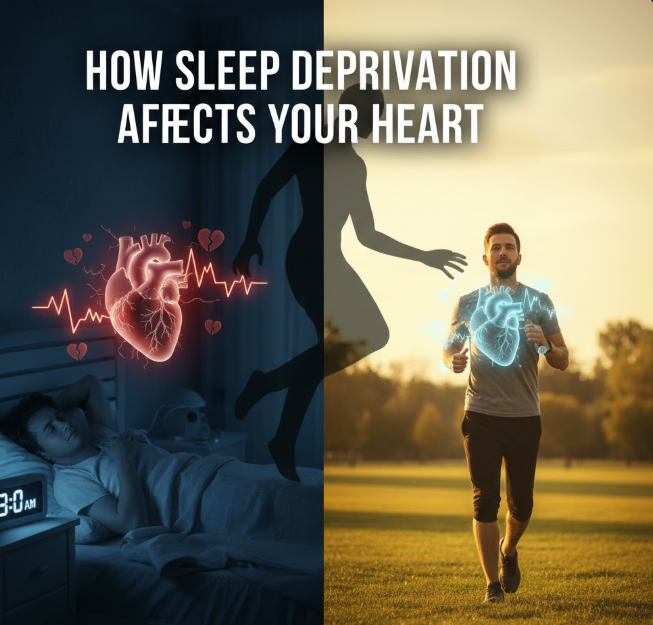
How to Protect Your Heart Through Better Sleep
Here are practical, science-based steps to improve sleep and heart health.
1. Set a Fixed Sleep Schedule
- Sleep and wake up at the same time daily
- Even on weekends
2. Create a Sleep-Friendly Bedroom
- Keep it dark
- Keep it cool
- Avoid loud noise
- Use comfortable bedding
3. Avoid These Before Bed
- Caffeine (6–8 hours before)
- Heavy meals
- Bright screens
- Stressful activities
4. Exercise Regularly
Regular exercise:
- Lowers blood pressure
- Improves sleep quality
- Strengthens the heart
But avoid intense workouts late at night.
5. Manage Stress
Try:
- Deep breathing
- Light stretching
- Prayer or meditation
- Journaling
6. Get Checked for Sleep Apnea
If you snore loudly or wake gasping, see a doctor.
Sleep Duration vs Heart Disease Risk (Simple Comparison)
| Sleep Duration | Heart Disease Risk |
|---|---|
| 7–9 hours | Lowest risk |
| 6 hours | Moderate risk |
| 5 hours or less | High risk |
| Irregular schedule | Increased risk |
Can You Reverse the Damage?
Good news: yes, in many cases.
Improving sleep can:
- Lower blood pressure
- Reduce inflammation
- Improve blood sugar control
- Reduce stress hormones
- Improve heart function
The heart is strong and can recover if damage is not severe.
Sleep Is as Important as Diet and Exercise
When people talk about heart health, they focus on:
- Healthy diet
- Exercise
- Avoiding smoking
But sleep should be added to that list.
Think of heart health like a table with four legs:
- Diet
- Exercise
- Stress management
- Sleep
If one leg is weak, the table becomes unstable.
Final Thoughts: Don’t Ignore Your Nighttime Heart Protector
Sleep deprivation may seem harmless. You might think, “I’ll sleep later” or “I can handle 5 hours.”
But your heart feels every lost hour.
Each night of poor sleep:
- Raises blood pressure
- Increases stress hormones
- Damages blood vessels
- Raises heart attack risk
Over months and years, this silent damage adds up.
If you want a healthy heart, strong energy, and a longer life, protect your sleep as seriously as you protect your diet and exercise.
Tonight, go to bed earlier.
Your heart will thank you tomorrow.