

Stress is a normal part of life. A little stress can help you meet deadlines, study for exams, or stay alert in dangerous situations. But when stress becomes constant, your body starts sending warning signals.
The problem? Many people ignore these signs until they turn into serious health issues.
In this detailed guide, you’ll learn:
- The early physical signs of stress
- Emotional and mental stress symptoms
- Long-term effects of chronic stress
- Simple, science-backed ways to reduce stress naturally
Let’s explore what your body might be trying to tell you.
What Happens Inside Your Body During Stress?
When you face pressure, your body activates the fight-or-flight response.
Your brain sends signals that release stress hormones like:
- Cortisol
- Adrenaline
This process involves the Hypothalamic–pituitary–adrenal axis, which controls how your body reacts to danger.
In short bursts, this is helpful. But if stress lasts for weeks or months, your system stays “switched on,” and that’s when problems begin.
15 Signs Your Body Is Stressed
Stress affects your mind, body, and behavior. Below are the most common warning signs.
1. Constant Fatigue (Even After Sleeping)
Feeling tired all the time is one of the earliest signs of chronic stress.
You may notice:
- Waking up exhausted
- Low energy throughout the day
- Brain fog
High cortisol levels disrupt sleep and drain energy.
2. Frequent Headaches
Stress tightens muscles in your neck and scalp.
This can lead to:
- Tension headaches
- Migraines
- Pressure around the forehead
If headaches happen often during busy periods, stress may be the cause.
3. Muscle Pain and Tightness
Chronic stress keeps muscles slightly contracted.
Common areas affected:
- Neck
- Shoulders
- Lower back
- Jaw
Over time, this may develop into Temporomandibular joint dysfunction (jaw pain from clenching).
4. Digestive Problems
Your gut is very sensitive to stress.
You may experience:
- Stomach cramps
- Bloating
- Diarrhea
- Constipation
Chronic stress can worsen conditions like Irritable bowel syndrome.
5. Hair Loss
High stress can push hair follicles into a resting phase.
This condition is known as Telogen effluvium.
You might notice:
- More hair on your pillow
- Excess shedding while showering
- Thinning hair
6. Mood Swings and Irritability
Do small problems suddenly make you angry?
Stress affects brain chemicals, leading to:
- Irritability
- Anxiety
- Sudden sadness
- Emotional outbursts
7. Difficulty Sleeping
Stress interferes with melatonin production.
Common sleep issues include:
- Trouble falling asleep
- Waking up at night
- Vivid dreams
- Insomnia
Chronic sleep problems may develop into Insomnia.
8. Rapid Heartbeat
Stress increases heart rate and blood pressure.
You may feel:
- Heart pounding
- Chest tightness
- Shortness of breath
Long-term stress increases risk of Hypertension.
9. Weakened Immune System
If you’re getting sick often, stress may be lowering your immunity.
Stress suppresses white blood cell function, making infections more likely.
10. Changes in Appetite
Stress can affect hunger hormones.
You may:
- Overeat (especially sugary foods)
- Lose appetite completely
- Experience weight gain or weight loss
11. Skin Problems
Stress triggers inflammation in the body.
This can worsen:
- Acne
- Eczema
- Psoriasis
Skin flare-ups during stressful times are very common.
12. Teeth Grinding
Stress often causes:
- Jaw clenching
- Teeth grinding (especially at night)
- Jaw soreness
This may damage teeth over time.
13. Poor Concentration
Chronic stress affects memory and focus.
You might notice:
- Forgetting small tasks
- Difficulty studying
- Reduced productivity
14. Low Motivation
When stress lasts too long, it may lead to emotional exhaustion, also called Burnout.
Symptoms include:
- Feeling disconnected
- Lack of motivation
- Cynicism toward work
15. Feeling Overwhelmed All the Time
If everything feels “too much,” your nervous system may be overloaded.
This is a sign you need rest and recovery.
Quick Stress Symptom Checklist
Answer YES or NO:
- Do you feel tired daily?
- Do you have muscle tightness?
- Do you struggle to sleep?
- Are you more irritable than usual?
- Do you get sick often?
If you answered yes to 3 or more, your body may be under chronic stress.
How Stress Affects Different Body Systems
| Body System | How Stress Affects It |
|---|---|
| Nervous System | Anxiety, poor sleep |
| Digestive System | Bloating, cramps |
| Immune System | Frequent infections |
| Heart | High blood pressure |
| Muscles | Tightness, pain |
| Skin | Acne, flare-ups |
The Long-Term Effects of Chronic Stress
If not managed, stress may increase risk of:
- Heart disease
- Type 2 diabetes
- Depression
- Obesity
- Autoimmune disorders
Chronic stress keeps cortisol levels high, which damages tissues over time.
How to Fix Stress Naturally
The good news? You can reduce stress with simple daily habits.
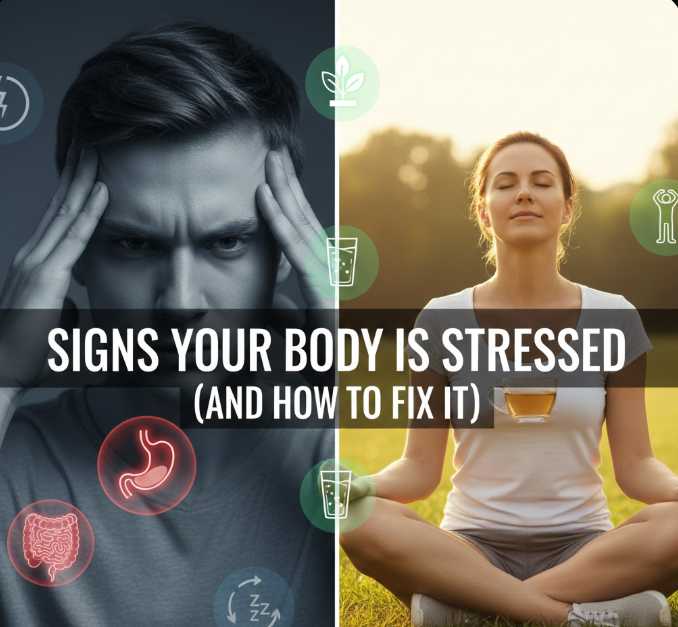
1. Deep Breathing (2 Minutes Rule)
Try this simple technique:
- Inhale for 4 seconds
- Hold for 4 seconds
- Exhale for 6 seconds
- Repeat 5–10 times
This calms your nervous system quickly.
2. Regular Physical Activity
Exercise lowers cortisol and boosts endorphins.
Best options:
- Walking 30 minutes daily
- Light jogging
- Cycling
- Yoga
Even a short walk improves mood instantly.
3. Improve Sleep Hygiene
Follow these steps:
- Sleep at the same time daily
- Avoid screens 1 hour before bed
- Keep your room dark and cool
- Avoid caffeine at night
Better sleep = lower stress.
4. Balanced Nutrition
Eat foods that support your nervous system:
- Leafy greens
- Nuts and seeds
- Eggs
- Fatty fish
- Whole grains
Avoid excessive sugar and processed foods.
5. Limit Screen Time
Too much social media increases anxiety.
Try:
- Digital detox for 1 hour daily
- No phone during meals
- No phone before sleep
6. Practice Mindfulness
Mindfulness reduces overthinking.
Simple ways to start:
- Focus on breathing
- Observe your surroundings
- Write in a journal
- Pray or meditate
7. Build Strong Social Connections
Talking to someone reduces stress hormones.
Spend time with:
- Family
- Friends
- Support groups
Human connection is powerful medicine.
8. Time Management Strategies
Reduce overwhelm by:
- Breaking tasks into small steps
- Creating a daily plan
- Setting realistic goals
- Saying “no” when needed
9. Seek Professional Help If Needed
If stress feels uncontrollable, consult:
- A doctor
- A therapist
- A counselor
Therapy can teach healthy coping skills.
Stress Relief Infographic Summary
🚨 Signs of Stress:
- Fatigue
- Headaches
- Muscle pain
- Hair loss
- Irritability
- Poor sleep
- Digestive problems
✅ Fix It With:
- Exercise
- Deep breathing
- Good sleep
- Healthy food
- Mindfulness
- Social support
Daily 7-Day Stress Reset Plan
Day 1:
Take a 20-minute walk.
Day 2:
Practice 5 minutes of deep breathing.
Day 3:
Sleep 30 minutes earlier.
Day 4:
Avoid sugar and junk food.
Day 5:
Call a friend or family member.
Day 6:
Spend 15 minutes in sunlight.
Day 7:
Write down 3 things you’re grateful for.
Repeat weekly for better results.
When to See a Doctor
You should seek medical advice if you experience:
- Chest pain
- Severe anxiety
- Panic attacks
- Persistent insomnia
- Thoughts of self-harm
Stress is common, but it shouldn’t control your life.
Final Thoughts: Listen to Your Body Before It Shouts
Your body always whispers before it screams.
Headaches, fatigue, irritability, and digestive issues are not “normal” if they happen daily. They may be signs that your nervous system needs rest.
The good news? Stress can be managed.
Small daily changes — better sleep, exercise, breathing, connection — can completely transform how you feel.
Start today. Your future self will thank you.