

A Simple and Practical Plan for Healthy, Sustainable Results
Intermittent fasting has become one of the most popular ways to lose weight, improve digestion, and boost energy. But many beginners feel confused. Should you skip breakfast? How long should you fast? Is it safe?
This beginner-friendly guide explains intermittent fasting in clear, simple language. You’ll learn how it works, how to start safely, what to eat, and how to avoid common mistakes.
If you’re new to fasting, this article will help you begin the right way — without extreme dieting or risky habits.
What Is Intermittent Fasting?
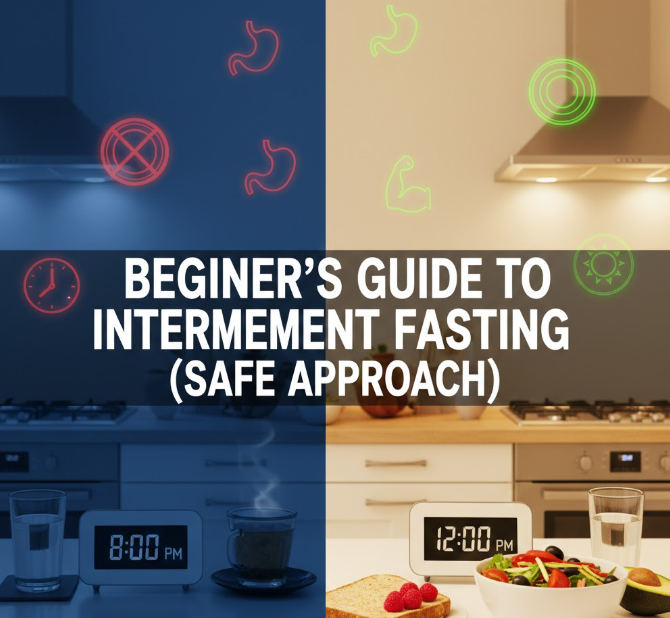
Intermittent fasting (IF) is not about what you eat — it’s about when you eat.
Instead of eating throughout the entire day, you choose specific hours for eating and specific hours for fasting (not eating).
For example:
- Eat between 8 AM and 8 PM
- Fast between 8 PM and 8 AM
That’s a 12-hour fasting window.
Why People Try Intermittent Fasting
Many people use intermittent fasting for:
- Weight loss
- Better digestion
- Improved blood sugar control
- Reduced bloating
- Increased energy
- Mental clarity
Some research suggests fasting may support heart health and reduce inflammation when done safely.
How Intermittent Fasting Works in the Body
When you eat, your body uses food for energy. When you stop eating for several hours:
- Your body finishes using stored sugar (glucose).
- It begins using stored fat for energy.
- Insulin levels drop.
- Fat burning increases.
This switch usually starts after 12–16 hours of fasting.
Popular Intermittent Fasting Methods
Here are the most common types:
1. 12:12 Method (Best for Beginners)
- 12 hours eating
- 12 hours fasting
Example:
Eat from 8 AM to 8 PM.
Fast from 8 PM to 8 AM.
This is the safest and easiest way to start.
2. 16:8 Method
- 16 hours fasting
- 8 hours eating
Example:
Eat from 12 PM to 8 PM.
Fast from 8 PM to 12 PM next day.
This is the most popular intermittent fasting schedule.
3. 5:2 Method
- Eat normally 5 days a week
- Eat very low calories (500–600) on 2 non-consecutive days
This method is more advanced and not ideal for beginners.
Safe 30-Day Starter Plan
If you are new, follow this step-by-step plan.
Week 1: Start with 12 Hours
- Stop eating after dinner.
- Delay breakfast slightly if possible.
- Drink water during fasting.
Focus on adjusting your body slowly.
Week 2: Move to 13–14 Hours
Example:
- Finish eating at 8 PM
- Eat first meal at 10 AM
Notice how your body feels.
Week 3–4: Try 16:8 (If Comfortable)
Only increase fasting time if:
- You feel stable
- You’re not dizzy
- You’re not extremely hungry
- Your energy is okay
If you feel weak, go back to 14 hours.
What You Can Drink During Fasting
Allowed:
- Water
- Black coffee (no sugar)
- Green tea
- Herbal tea
- Plain sparkling water
Avoid:
- Juice
- Soda
- Milk
- Sweetened drinks
Even small sugar can break your fast.
What to Eat During Your Eating Window
Intermittent fasting works best when combined with healthy food choices.
Focus on:
Protein
- Eggs
- Chicken
- Fish
- Lentils
- Greek yogurt
Healthy Fats
- Olive oil
- Nuts
- Avocados
Fiber
- Vegetables
- Fruits
- Whole grains
Avoid Overeating
Some beginners think:
“I fasted all day, now I can eat anything.”
That defeats the purpose.
Sample 16:8 Daily Schedule
| Time | Activity |
|---|---|
| 7 AM | Water or black coffee |
| 12 PM | First meal (protein + vegetables) |
| 3 PM | Healthy snack |
| 7 PM | Balanced dinner |
| 8 PM | Stop eating |
| Overnight | Fasting continues |
Benefits of Intermittent Fasting
Here are common benefits when done safely:
- Fat loss
- Improved insulin sensitivity
- Better digestion
- Reduced bloating
- Increased focus
- Simpler meal planning
Who Should NOT Try Intermittent Fasting
Intermittent fasting is not for everyone.
Avoid or consult a doctor if you:
- Are pregnant or breastfeeding
- Have diabetes (especially on insulin)
- Have a history of eating disorders
- Are underweight
- Have chronic medical conditions
- Are under 18
Safety always comes first.
Common Beginner Mistakes
1. Starting Too Fast
Jumping directly into 18–20 hours fasting can cause:
- Dizziness
- Headaches
- Fatigue
Start slow.
2. Not Drinking Enough Water
Dehydration can feel like hunger.
Drink regularly.
3. Eating Junk Food
Fasting does not cancel unhealthy food choices.
4. Ignoring Your Body
If you feel faint or sick, stop fasting and eat something healthy.
Possible Side Effects (Usually Temporary)
During the first 1–2 weeks:
- Mild headaches
- Irritability
- Low energy
- Hunger waves
These often improve as your body adapts.
Intermittent Fasting and Exercise
You can exercise while fasting.
Best beginner options:
- Walking
- Light jogging
- Yoga
- Strength training
If you feel weak, eat before workouts.
Intermittent Fasting vs Traditional Dieting
| Intermittent Fasting | Traditional Diet |
|---|---|
| Focus on timing | Focus on calories |
| Fewer meals | Multiple small meals |
| Simple structure | Often complex rules |
| May reduce insulin | Calorie control based |
Both can work. Choose what fits your lifestyle.
Does Intermittent Fasting Work for Weight Loss?
Yes, for many people — because:
- You naturally eat fewer calories.
- Insulin levels drop.
- Fat burning increases.
But results depend on food quality and consistency.
Long-Term Sustainability
The key question is not:
“Can I fast for 30 days?”
It is:
“Can I do this for 1–2 years safely?”
If it feels extreme, it won’t last.
Choose a schedule that feels realistic.
Simple Fasting Success Checklist
Daily:
- Drink enough water
- Eat balanced meals
- Avoid binge eating
- Sleep 7–8 hours
- Increase fasting gradually
- Listen to your body
Frequently Asked Questions
Will I lose muscle while fasting?
Not if you eat enough protein and do strength training.
Can I drink coffee during fasting?
Yes, black coffee without sugar or milk.
Is skipping breakfast unhealthy?
Not necessarily. What matters most is total nutrition and overall health.
How long should beginners fast?
Start with 12 hours. Increase slowly if comfortable.
Final Thoughts: A Smart and Safe Way to Start
Intermittent fasting is a tool — not magic. It can help with weight loss, energy, and digestion when done safely and gradually.
The safest beginner approach is:
- Start with 12 hours
- Improve food quality
- Drink enough water
- Increase slowly
- Pay attention to how you feel
You don’t need extreme fasting to see results. Consistency and balance always win.
If done wisely, intermittent fasting can become a simple and sustainable lifestyle — not just another diet.