

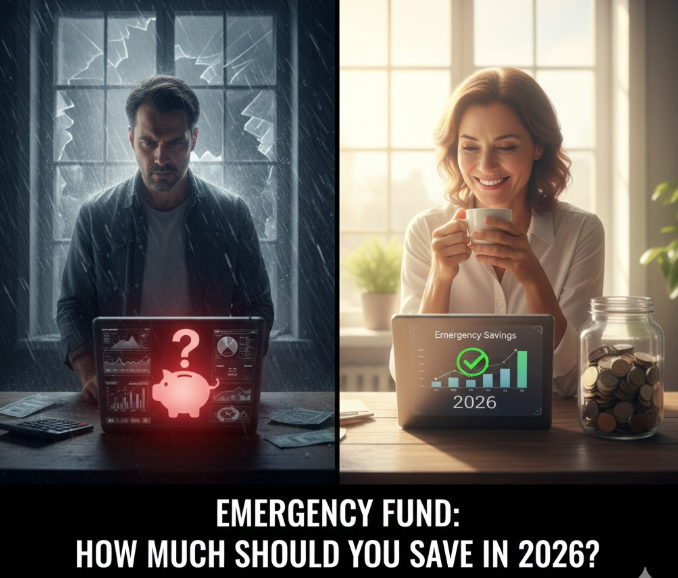
Life is unpredictable. A job loss, medical bill, car repair, or family emergency can happen when you least expect it. In 2026, with rising living costs, economic uncertainty, and global instability, having an emergency fund is no longer optional — it’s essential.
An emergency fund is your financial safety net. It protects you from debt, stress, and financial disaster. But the big question is:
How much should you save in 2026?
In this detailed guide, you’ll learn:
- What an emergency fund really is
- How much you should save based on your situation
- Updated 2026 savings guidelines
- How inflation affects your target
- Where to keep your emergency money
- Step-by-step strategies to build your fund fast
Let’s break it down in a simple and practical way.
What Is an Emergency Fund?
An emergency fund is money set aside for unexpected expenses only.
It is NOT for:
- Vacations
- Shopping
- Festivals
- Upgrading your phone
- Eating out
It is ONLY for true emergencies like:
- Medical emergencies
- Job loss
- Major car repairs
- Urgent home repairs
- Family crisis
Think of it as your financial airbag. You hope you never need it — but when you do, it protects you.
Why Emergency Funds Are More Important in 2026
In 2026, several financial factors make emergency savings more critical:
1. Inflation and Rising Living Costs
Prices of groceries, fuel, rent, and utilities continue to increase in many countries.
2. Job Market Changes
Automation, AI, and remote work shifts are changing job stability.
3. Medical Costs
Healthcare expenses are rising globally.
4. Economic Uncertainty
Global markets remain unpredictable.
Without savings, a single emergency can push you into debt.
The 2026 Rule: How Much Should You Save?
Financial experts generally recommend:
Save 3 to 6 Months of Essential Expenses
But in 2026, many experts suggest aiming for 4 to 9 months, depending on job stability and income type.
Step 1: Calculate Your Monthly Essential Expenses
Include only essentials:
- Rent or mortgage
- Utilities
- Groceries
- Transportation
- Insurance
- School fees
- Minimum loan payments
Exclude:
- Entertainment
- Subscriptions
- Luxury spending
Example Monthly Budget
| Expense | Monthly Cost |
|---|---|
| Rent | $800 |
| Groceries | $300 |
| Utilities | $150 |
| Transport | $200 |
| Insurance | $100 |
| Loan Payments | $150 |
| Total Essential Expenses | $1,700 |
Step 2: Multiply by Months of Protection
Now multiply your essential expenses by your target months.
Emergency Fund Target Example
| Months Covered | Total Needed |
|---|---|
| 3 months | $5,100 |
| 6 months | $10,200 |
| 9 months | $15,300 |
If your monthly essentials are $1,700:
- Minimum goal (3 months) = $5,100
- Safer goal (6 months) = $10,200
- Extra secure (9 months) = $15,300
How Much Should YOU Save? (Based on Situation)
Not everyone needs the same amount.
1. Stable Job (Government or Permanent Position)
Recommended: 3–4 months
2. Private Sector Employee
Recommended: 4–6 months
3. Freelancer or Business Owner
Recommended: 6–9 months
4. Single Income Household
Recommended: 6–9 months
5. Dual Income Household
Recommended: 3–6 months
Emergency Fund Formula for 2026
Here’s a simple formula:
Emergency Fund = Monthly Essential Expenses × Risk Level Months
Where Risk Level Months depends on:
- Job stability
- Health condition
- Number of dependents
- Debt level
- Economic climate
The Inflation Factor in 2026
Inflation reduces purchasing power. That means:
If you saved $10,000 five years ago, it may not cover the same expenses today.
Inflation Impact Example
| Year | Monthly Expenses |
|---|---|
| 2022 | $1,500 |
| 2026 | $1,900 |
If your expenses increased, your emergency fund must increase too.
That’s why reviewing your emergency fund yearly is important.
Where Should You Keep Your Emergency Fund?
Your emergency money must be:
- Safe
- Easy to access
- Not invested in risky assets
Best Options in 2026
1. High-Yield Savings Account
- Safe
- Earns interest
- Easily accessible
2. Money Market Account
- Slightly higher returns
- Still liquid
3. Separate Bank Account
Keeps you from accidentally spending it.
Where NOT to Keep It
- Stock market
- Cryptocurrency
- Locked investments
- Long-term fixed deposits (hard to withdraw)
Emergency money must be available immediately.
Starter Emergency Fund: Begin Small
If 6 months feels overwhelming, start with:
$1,000 Starter Goal
Why?
- Covers small emergencies
- Prevents credit card debt
- Builds saving habit
Once you hit $1,000, then build toward 3–6 months.
Step-by-Step Plan to Build Your Emergency Fund Fast
Step 1: Track Your Spending
Find unnecessary expenses.
Step 2: Cut Non-Essentials
Reduce:
- Food delivery
- Subscriptions
- Impulse shopping
Step 3: Automate Savings
Set automatic transfers monthly.
Step 4: Use Extra Income
Save:
- Bonuses
- Freelance income
- Tax refunds
- Gifts
Step 5: 50/30/20 Rule
- 50% Needs
- 30% Wants
- 20% Savings
Direct savings toward your emergency fund first.
How Long Will It Take to Save?
Example:
If you need $9,000 and save $500 per month:
$9,000 ÷ $500 = 18 months
Here’s a savings timeline example:
| Monthly Savings | Time to Reach $9,000 |
|---|---|
| $300 | 30 months |
| $500 | 18 months |
| $750 | 12 months |
| $1,000 | 9 months |
The more you save, the faster you reach financial security.
Common Emergency Fund Mistakes
Avoid these errors:
- Spending it on vacations
- Investing it in risky assets
- Not updating it yearly
- Keeping it in checking account (easy to spend)
- Building emergency fund while ignoring high-interest debt
Emergency Fund vs Investment: Which Comes First?
Always build:
- Small emergency fund
- Pay high-interest debt
- Build full emergency fund
- Start investing
Investing without an emergency fund is risky. You may need to sell investments at a loss during emergencies.
Signs You Need a Bigger Emergency Fund
- You feel anxious about job security
- You have medical risks
- You are self-employed
- You support parents or children
- You have unstable income
More risk = more savings needed.
Emergency Fund Checklist for 2026
✔ Calculated monthly essential expenses
✔ Multiplied by 3–9 months
✔ Opened separate savings account
✔ Automated monthly transfers
✔ Reviewed fund for inflation
✔ Avoided risky investments
If you check all these, you are financially prepared.
Real-Life Scenario: Why It Matters
Imagine:
You lose your job today.
Without savings:
- Rent unpaid
- Loans overdue
- Stress increases
- You borrow money
- Credit score drops
With emergency fund:
- Bills paid calmly
- Time to find better job
- No panic
- No debt
That’s the power of financial preparation.
Is 12 Months of Savings Too Much?
In 2026, some financial advisors recommend 12 months for:
- Entrepreneurs
- High-income earners
- People in unstable industries
However, keeping too much cash may reduce investment growth. Balance is important.
Final Thoughts: Financial Peace Starts with Preparation
An emergency fund is not just money — it is peace of mind.
In 2026, with rising expenses and economic uncertainty, your safety net should be stronger than ever.
Here’s the simple answer:
- Minimum: 3 months of expenses
- Recommended: 4–6 months
- High-risk income: 6–9 months
- Maximum safety: 12 months
Start small. Stay consistent. Increase gradually.
Your future self will thank you when life throws an unexpected challenge.
Build your emergency fund today — because financial security isn’t about luck. It’s about preparation.