

Your Ultimate Beginner‑Friendly Guide to Choosing the Right Coverage for Your Dog or Cat
Taking care of a pet is one of life’s greatest joys — and responsibilities. But veterinary care can be expensive. Accidents, illnesses, surgeries, and emergency care can quickly add up to thousands of dollars. That’s where pet insurance comes in: it helps cover medical bills so you can focus on your pet’s health, not the cost.
In this comprehensive guide, you’ll learn what pet insurance really is, how it works, what types of plans exist, and how to choose the best one in 2026. This guide is easy to understand, actionable, and perfect whether you have a new puppy, a senior cat, or are planning to adopt your first pet.
What Is Pet Insurance?
Pet insurance is a health insurance plan for your dog or cat. You pay a monthly or annual premium, and in return, the insurer reimburses part of your veterinary bills when your pet gets sick or injured.
Unlike human insurance, pet insurance often starts paying after the treatment, meaning you usually pay the vet first and then get reimbursed.
How Pet Insurance Works: The Basics
Most pet insurance plans follow this process:
- You Buy a Plan: Choose coverage level, deductible, and reimbursement percentage.
- Your Pet Gets Care: Take your pet to a licensed vet when they get sick or injured.
- Submit a Claim: Send the vet bill to your insurance company.
- Get Reimbursed: The insurer reimburses you a portion of the eligible costs based on your plan.
Key Terms You Should Know
| Term | Meaning |
|---|---|
| Premium | The amount you pay monthly or yearly for insurance. |
| Deductible | The amount you pay before the insurer starts paying. |
| Reimbursement Rate | The percentage of eligible costs the insurer pays (e.g., 70%, 80%, 90%). |
| Annual Limit | The maximum the insurer will pay per year. |
| Waiting Period | The time before coverage begins after buying the plan. |
| Pre‑Existing Condition | Health issues your pet had before the plan — often not covered. |
What Pet Insurance Doesn’t Cover
It’s important to know what pet insurance usually does not pay for:
✔ Pre‑existing conditions
✔ Routine vaccinations (unless add‑ons available)
✔ Grooming or boarding
✔ Elective cosmetic procedures
✔ Breeding‑related costs
Some plans offer wellness add‑ons for routine care, but those usually cost more.
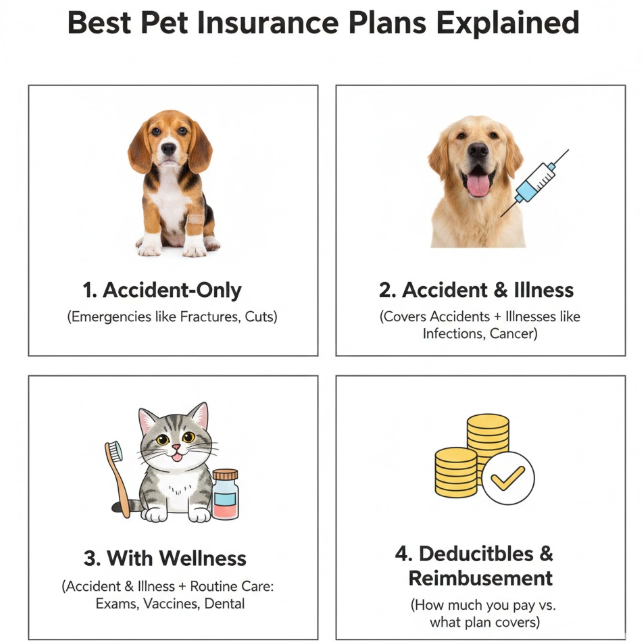
Types of Pet Insurance Plans
Let’s break down the main types so you can understand what each one covers:
1. Accident‑Only Plans
Best For: Budget‑friendly coverage and peace of mind
What It Covers:
- Broken bones
- Cuts or wounds
- Bite injuries
- Ingested foreign objects
What It Doesn’t Cover: Illnesses like infections, cancer, chronic conditions, etc.
✅ Lower premiums
❌ No illness coverage
2. Accident + Illness Plans
This is the most popular type and often considered true pet health insurance.
What It Covers:
- Accidents (sprains, breaks, ingestion injuries)
- Illnesses (ear infections, digestive issues, cancer treatment, etc.)
Pros:
- Broader protection
- Helps with both sudden injuries and sickness
Cons:
- Slightly higher cost than accident‑only plans
3. Wellness / Routine Care Add‑Ons
These plans add coverage for:
- Vaccines
- Flea/tick prevention
- Dental cleanings
- Annual check‑ups
Note: These are optional and usually come with an extra monthly cost. They are not standard in most pet insurance plans.
How to Choose the Right Plan: 6 Important Factors
Choosing pet insurance isn’t one‑size‑fits‑all. Here’s what to consider:
1. Your Pet’s Age
Older pets may have higher premiums and more pre‑existing conditions, while puppies/kittens may have lower costs but need vaccinations and early preventive care.
2. Breed and Health Risks
Some breeds are prone to specific health issues:
- Bulldogs → respiratory and joint problems
- German Shepherds → hip dysplasia
- Persian cats → dental issues
Knowing breed‑related risks helps you choose better coverage.
3. Your Budget
Ask yourself:
- Can I afford a higher premium for better coverage?
- Do I want lower monthly payments with a higher deductible?
- What percentage of the bill am I comfortable covering?
4. Deductible Level
- Lower Deductible: You pay less out of pocket when you claim, but higher monthly cost.
- Higher Deductible: Lower monthly payments, but more cost before insurance pays.
5. Reimbursement Percentage
A plan with 90% reimbursement pays more of your bill than one with 70%, but tends to cost more.
6. Waiting Periods
Most plans have waiting periods (e.g., “14 days after enrollment”) before coverage begins. Choose a plan with a waiting period you’re comfortable with.
Top Pet Insurance Companies in 2026 Compared
Here’s a side‑by‑side look at some of the best and most trusted pet insurance plans available:
| Company | Coverage Type | Accident & Illness | Wellness Option | Reimbursement Options | Key Strength |
|---|---|---|---|---|---|
| Healthy Paws | Accident + Illness | ✔ Yes | Optional | 70%, 80%, 90% | Excellent claim processing |
| Nationwide | Multiple Plans | ✔ Yes | ✔ Yes | Varies by plan | Broadest coverage options |
| Trupanion | Lifetime Coverage | ✔ Yes | Add‑on | 90% standard | Lifetime coverage & direct vet pay |
| Pets Best | Flexible plans | ✔ Yes | ✔ Yes | 50%, 70%, 90% | Great value & wellness add‑ons |
| Embrace | Customizable | ✔ Yes | ✔ Yes | Up to 90% | Covers curable pre‑existing conditions |
| ASPCA Pet Health Insurance | Affordable | ✔ Yes | ✔ Yes | 70%, 80%, 90% | Budget‑friendly coverage |
| Figo | Tech‑friendly | ✔ Yes | Optional | 70%, 80%, 90% | Strong app + cloud record storage |
Best For Beginners: Quick Picks
If you want straightforward recommendations:
🐶 Best Overall for Most Pets
Healthy Paws
✔ Broad coverage
✔ Fast claim processing
✔ No lifetime limits
🐱 Best for Budget‑Minded Owners
ASPCA Pet Health Insurance
✔ Affordable premiums
✔ Good coverage for common medical needs
🐾 Best for Comprehensive Care
Trupanion
✔ Direct vet payment option
✔ Excellent for chronic or long‑term conditions
🦴 Best Customizable Plan
Embrace
✔ Adjustable reimbursement and deductibles
✔ Covers curable pre‑existing conditions
Sample Cost Breakdown (What You Might Pay)
| Plan Type | Monthly Premium | Deductible Options | Reimbursement Est. |
|---|---|---|---|
| Accident‑Only | $10–$25 | $100–$500 | 70–90% |
| Accident + Illness (Basic) | $25–$50 | $100–$500 | 70–80% |
| Accident + Illness (Full) | $50–$100 | $100–$300 | 80–90% |
| Wellness Add‑On | $10–$30 | N/A | Fixed benefits |
💡 Note: Actual costs depend on your pet’s age, breed, location, and plan chosen.
What Pet Insurance Typically Covers
Here’s a simple look at common covered items:
Covered in Most Plans
✔ Emergency care
✔ Broken bones
✔ Infections
✔ X‑rays and diagnostics
✔ Hospitalization
✔ Surgery
✔ Cancer treatment
Sometimes Covered (With Add‑Ons)
✔ Wellness exams
✔ Vaccinations
✔ Flea/tick prevention
✔ Dental cleanings
Not Covered
✘ Pre‑existing conditions
✘ Cosmetic procedures
✘ Behavior training
✘ Elective surgeries
How to File a Pet Insurance Claim
Filing a claim is usually simple — and most companies offer online or app submission:
- Pay your vet bill
- Submit a claim form (online or via app)
- Upload vet invoice and medical records
- Wait for processing (often 5–10 business days)
- Receive reimbursement
Some insurers offer direct vet payment, where you pay only your portion and the company pays the rest directly to the clinic.
Tips to Save Money on Pet Insurance
✔ Choose a higher deductible if you want lower premiums
✔ Ask about multi‑pet discounts
✔ Compare quotes annually
✔ Consider waiting until your pet is healthy before enrolling
✔ Keep records and receipts organized for faster claims
Real Questions Pet Owners Ask
Is pet insurance worth it?
Yes — especially for unexpected illnesses or emergencies. It gives peace of mind and financial protection.
Can I get insurance after my pet gets sick?
Most insurers won’t cover pre‑existing conditions, so earlier enrollment is better.
Does age matter?
Older pets may have higher premiums and more limits on coverage.
Can I use any vet?
Most plans let you go to any licensed vet, including emergency hospitals.
Pros and Cons of Pet Insurance at a Glance
👍 Pros
- Reduces financial risk
- Supports quality care decisions
- Flexible plans for different budgets
- Peace of mind for emergencies
👎 Cons
- You pay premiums even if you don’t use it
- Pre‑existing conditions usually aren’t covered
- Costs vary widely by pet age and health
Final Thoughts: Choose the Right Plan for Your Pet
Pet insurance isn’t one‑size‑fits‑all. The best plan for you depends on:
🐾 Your pet’s age
🐾 Breed and health risk
🐾 Your budget
🐾 How much coverage you want
Whether you want basic accident coverage, full illness protection, or wellness add‑ons — there’s a plan out there for you.
Take time to compare quotes, read the fine print, and choose a plan that gives you confidence and protection when your pet needs it most.