

Cats are fascinating creatures. Their mysterious antics, sudden bursts of energy, and quirky behaviors often leave their owners puzzled. Understanding why cats act the way they do helps you care for them better and strengthens the bond between you and your feline friend.
This guide covers:
- Common cat behaviors and what they mean
- Reasons behind “weird” actions
- Tips to respond appropriately to your cat’s habits
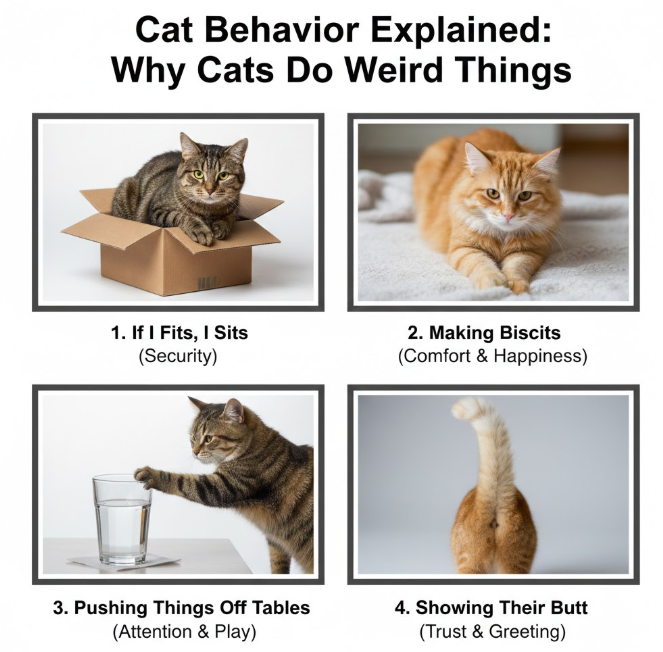
1. Kneading: The “Making Biscuits” Motion
Cats often press their paws alternately against soft surfaces, a motion called kneading.
Why They Do It:
- Comfort and Security: Reminds them of nursing from their mother.
- Marking Territory: Cats have scent glands in their paws.
- Relaxation: It’s a soothing behavior for stress relief.
Tip: Provide soft blankets or cushions for kneading to protect furniture.
2. Zoomies: Sudden Energy Bursts
Cats sometimes run wildly around the house for no apparent reason. This is often called the “zoomies.”
Causes:
- Pent-Up Energy: Especially common in indoor cats.
- Hunting Instinct: Playful practice for chasing prey.
- Stress Relief: Helps release tension or frustration.
Tip: Engage your cat with toys or interactive play to manage zoomies.
3. Head-Butting or “Bunting”
When your cat bumps its head against you, it’s called bunting.
Reasons:
- Affection: Cats show love and trust this way.
- Scent Marking: Transfers their scent to you, marking you as safe and familiar.
- Seeking Attention: Sometimes a subtle “pet me” signal.
4. Tail Twitching
A cat’s tail movements are strong indicators of mood:
- Slow, gentle swish: Focused or curious.
- Rapid flicking or twitching: Irritation or excitement.
- Puffed-up tail: Fear or defensive reaction.
Tip: Learn tail signals to understand your cat’s mood before interacting.
5. Chattering at Birds or Prey
Cats sometimes make a rapid clicking sound when watching birds through windows.
Reasons:
- Predatory Instinct: Mimics a hunting sound.
- Frustration: Unable to reach prey outside.
Tip: Provide toys that mimic hunting behavior to satisfy instincts.
6. Sleeping in Odd Places
Cats love tight, elevated, or hidden spots for sleep.
- High perches: Offer a sense of security and observation.
- Boxes or closets: Enclosed spaces feel safe.
- Warm spots: Cats naturally seek warmth.
Tip: Provide cozy beds and safe hideouts for your cat.
7. Bringing “Gifts”
Cats sometimes leave prey (real or toy) for their owners.
Why:
- Instinct to Provide: They see you as part of their “family.”
- Play Behavior: Mimics hunting practice.
- Attention-Seeking: A way to engage you.
Tip: Use toys for interactive hunting play instead of outdoor prey.
8. Licking and Grooming
Cats groom themselves frequently, sometimes licking their humans.
Reasons:
- Affection: Shows trust and bonding.
- Marking Territory: Transfers scent to objects or people.
- Stress or Boredom: Excessive licking can indicate anxiety.
Tip: If grooming is excessive, check for stress or medical issues.
9. Sudden Hiding
Cats often hide for hours, which can be normal or concerning.
- Normal: Rest, feel safe, or avoid overstimulation.
- Concerning: Illness or pain can cause prolonged hiding.
Tip: Monitor behavior and consult a vet if hiding is unusual.
10. Purring: More Than Happiness
Purring is often associated with contentment, but cats also purr for other reasons:
- Self-Soothing: Reduces stress and calms themselves.
- Pain or Discomfort: Cats may purr when injured.
- Communication: Indicates safety or bonding.
Quick Table: Common Cat Behaviors and What They Mean
| Behavior | Possible Meaning |
|---|---|
| Kneading | Comfort, marking, relaxation |
| Zoomies | Energy release, play, hunting instinct |
| Head-Butting | Affection, scent marking |
| Tail Twitching | Mood indicator (curious, irritated, fearful) |
| Chattering | Predatory instinct, frustration |
| Odd Sleeping Spots | Security, warmth, observation |
| Bringing Gifts | Hunting instinct, bonding |
| Licking | Affection, marking, stress |
| Hiding | Rest, safety, illness |
| Purring | Contentment, self-soothing, pain signal |
Tips for Understanding and Bonding With Your Cat
- Observe Patterns: Every cat is unique—watch what triggers specific behaviors.
- Respect Personal Space: Don’t force interaction when your cat wants to hide.
- Interactive Play: Use toys to satisfy hunting instincts and burn energy.
- Provide Comfort Zones: High perches, cozy beds, and safe hideouts reduce stress.
- Regular Vet Check-Ups: Unusual behavior may indicate health issues.
Fun Facts About Cat Behavior
- Cats have around 30 muscles in their ears to detect sounds precisely.
- Whiskers are sensitive to touch and help cats measure space and detect movement.
- Domestic cats retain many behaviors of their wild ancestors, including hunting, marking territory, and grooming rituals.
Final Thoughts
Cats may seem mysterious or weird, but most behaviors are rooted in instinct, comfort, and communication. Understanding their quirks helps you respond appropriately, strengthen trust, and enjoy a happier relationship with your feline companion.
Remember: Observe, respect, and provide a safe environment, and your cat will thrive—quirky behaviors and all!