

Dogs bring joy, loyalty, and unconditional love to our lives. But like any living creature, they can face health challenges that may affect their quality of life. Being aware of common dog health problems helps you detect issues early, take preventive measures, and ensure your furry friend stays happy and healthy.
This guide breaks down the most frequent health concerns for dogs, their signs, prevention tips, and when to consult a veterinarian.
Why Awareness Matters
Knowing common dog health problems helps you:
- Spot early warning signs
- Take preventive measures
- Save on costly treatments
- Improve your dog’s comfort and lifespan
Even healthy dogs can develop issues over time, especially as they age, so proactive care is essential.
1. Obesity
Obesity is one of the most common problems in dogs and can lead to other serious conditions.
Signs of Obesity:
- Difficulty walking or exercising
- Visible fat deposits around the body
- Panting excessively
- Reluctance to move
Prevention & Care:
- Feed a balanced diet and avoid excessive treats
- Exercise daily according to breed and age
- Monitor weight regularly
- Consult your vet for a tailored diet plan
💡 Tip: Obesity increases the risk of diabetes, heart disease, arthritis, and decreased lifespan.
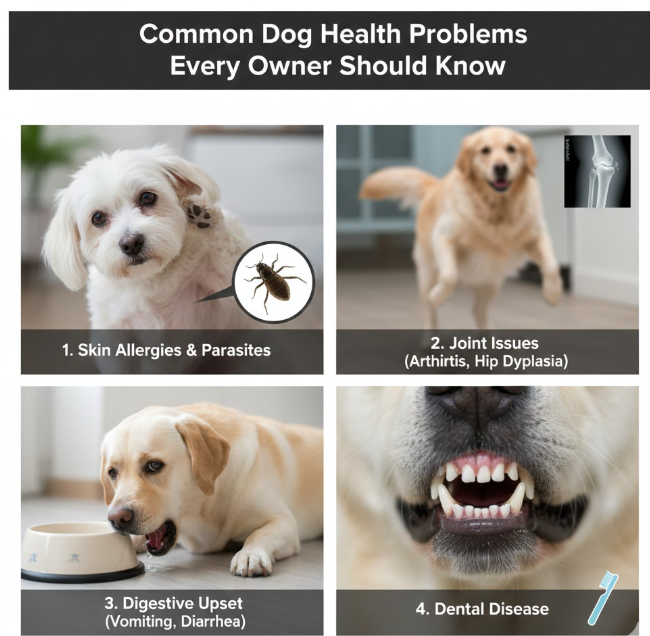
2. Dental Disease
Dental problems affect more than your dog’s mouth—they can impact overall health.
Signs of Dental Issues:
- Bad breath
- Yellow or brown teeth
- Bleeding or swollen gums
- Drooling or difficulty eating
Prevention & Care:
- Brush your dog’s teeth regularly
- Provide dental chews or toys
- Schedule professional dental cleanings
💡 Tip: Untreated dental disease can lead to infections that affect the heart, liver, and kidneys.
3. Ear Infections
Dogs with floppy ears or lots of hair in the ear canal are prone to ear infections.
Signs of Ear Infection:
- Scratching or pawing at ears
- Redness or swelling inside the ear
- Foul odor
- Head shaking
Prevention & Care:
- Clean ears regularly with vet-approved solutions
- Dry ears after swimming or bathing
- Avoid inserting objects deep into the ear canal
💡 Tip: Chronic ear infections can lead to hearing loss if untreated.
4. Skin Allergies and Irritations
Skin problems are very common in dogs and can range from mild irritation to severe infections.
Signs:
- Itching, scratching, or licking excessively
- Red, inflamed, or flaky skin
- Hair loss or bald patches
Common Causes:
- Fleas or parasites
- Food allergies
- Environmental allergens like pollen, dust, or mold
Prevention & Care:
- Regular grooming and flea prevention
- Feed a high-quality diet
- Consult a vet for allergy testing or medication
💡 Tip: Avoid using human lotions or creams; only use vet-approved treatments.
5. Arthritis and Joint Problems
Older dogs or large breeds are prone to arthritis, hip dysplasia, or other joint issues.
Signs:
- Difficulty rising or climbing stairs
- Limping or favoring one leg
- Reduced activity or reluctance to play
Prevention & Care:
- Maintain a healthy weight
- Provide joint supplements if recommended by a vet
- Moderate low-impact exercise like swimming or walking
💡 Tip: Early detection and management can greatly improve mobility and comfort.
6. Gastrointestinal Issues
Digestive problems can range from mild upset to serious illness.
Common Signs:
- Vomiting or diarrhea
- Loss of appetite
- Lethargy
- Bloating or abdominal pain
Causes:
- Dietary indiscretion (eating harmful objects or spoiled food)
- Parasites (worms)
- Food allergies or intolerance
Prevention & Care:
- Feed a consistent, balanced diet
- Avoid giving human food or harmful snacks
- Schedule regular deworming and vet checkups
💡 Tip: Persistent vomiting or diarrhea requires immediate veterinary attention.
7. Heart Disease
Heart problems are more common in older dogs or certain breeds (e.g., Cavalier King Charles Spaniel, Dobermans).
Signs:
- Coughing, especially at night
- Difficulty breathing
- Fatigue or weakness
- Swollen abdomen
Prevention & Care:
- Routine vet check-ups
- Maintain healthy weight and exercise
- Watch for early warning signs and follow vet recommendations
💡 Tip: Early diagnosis of heart issues can greatly improve prognosis.
8. Parasites
Dogs can be affected by internal parasites (worms) and external parasites (fleas, ticks).
Signs:
- Scratching or hair loss
- Visible worms in feces
- Lethargy or poor appetite
- Skin irritation or redness
Prevention & Care:
- Use monthly flea, tick, and worm prevention products
- Maintain a clean environment
- Regular vet check-ups for parasite screening
💡 Tip: Some parasites can transmit diseases to humans, so prevention protects the whole household.
9. Urinary Tract Infections (UTIs)
UTIs are common, especially in female dogs.
Signs:
- Frequent urination or accidents indoors
- Straining to urinate
- Blood in urine
- Licking the urinary area frequently
Prevention & Care:
- Encourage regular water intake
- Provide frequent opportunities for bathroom breaks
- Consult your vet for proper diagnosis and treatment
💡 Tip: Untreated UTIs can lead to kidney infections or more serious complications.
10. Obsessive Behaviors
Behavioral health is also part of overall wellness. Stress, anxiety, or boredom can cause:
- Excessive licking or chewing
- Barking or whining
- Pacing or digging
Prevention & Care:
- Provide mental stimulation with toys or training
- Maintain routine and socialization
- Consult a vet or animal behaviorist if behaviors persist
💡 Tip: Behavioral problems can sometimes indicate underlying medical conditions, so get a professional check if changes occur suddenly.
Quick Health Checklist for Dog Owners
| Area | What to Monitor | Prevention Tip |
|---|---|---|
| Weight | Obesity or sudden weight change | Balanced diet, regular exercise |
| Teeth | Bad breath, plaque, gum bleeding | Brush teeth, dental chews |
| Ears | Redness, odor, scratching | Clean ears regularly |
| Skin | Hair loss, itching | Grooming, flea prevention |
| Joints | Limping, stiffness | Weight management, low-impact exercise |
| Digestion | Vomiting, diarrhea | Proper diet, vet visits |
| Heart | Coughing, fatigue | Routine vet checks |
| Parasites | Fleas, worms | Preventive medications |
| Urination | Straining, accidents | Hydration, bathroom schedule |
| Behavior | Anxiety, compulsions | Training, mental stimulation |
Final Thoughts
Every dog is unique, and health issues can vary by breed, age, and lifestyle. Early detection, preventive care, and regular vet visits are key to keeping your dog happy and healthy.
Being aware of common dog health problems allows you to take action before issues become serious, ensuring your furry friend enjoys a long, active, and loving life.