

Traveling is exciting, but unfortunately, scams targeting tourists are common worldwide. From overpriced rides to fake tickets, scams can ruin your trip and cost you time and money. The good news is that with awareness and smart planning, you can spot scams before they happen and protect yourself.
Here’s a complete guide to avoiding tourist scams, with practical tips, real-life examples, and a safety checklist.
Why Tourist Scams Happen
Tourists are often targeted because:
- They are unfamiliar with the area
- They may not know the local currency or prices
- They can be distracted by attractions
- They may trust strangers too quickly
Being aware is the first step to staying safe.
Common Types of Tourist Scams
1. Overpriced Transportation
- Taxi drivers refusing meters or charging extra
- Tuk-tuk or rickshaw drivers inflating fares
Tip:
- Always agree on the fare before starting
- Use reputable ride-hailing apps when available
- Learn local average rates for common routes
2. Fake Tickets or Tours
- Street vendors selling fake entrance tickets
- Tour operators offering “special deals” that don’t exist
Tip:
- Buy tickets from official sources or hotel concierge
- Check online reviews for tour companies
- Avoid deals that seem too good to be true
3. Friendly Strangers with Hidden Agendas
- Locals approaching tourists to offer “help” or tours”
- People asking to guide you and then demanding money
Tip:
- Politely decline unsolicited offers
- Rely on official guides or company-organized tours
- Never accept rides or favors from strangers
4. ATM and Money Scams
- Skimming devices on ATMs
- People offering to help you withdraw money
- Exchange counters giving fake bills or poor rates
Tip:
- Use ATMs in banks or trusted locations
- Cover the keypad when entering your PIN
- Avoid exchanging money with strangers
5. Fake Police or Officials
- Someone posing as police asking for ID or fines
- Requesting payment in cash for “violations”
Tip:
- Always ask for ID from officials
- Never hand over your passport; carry a copy instead
- Pay fines at official offices, not on the street
6. Overpriced Goods and Souvenirs
- Shops charging tourists 3–5 times the local price
- Sellers claiming items are “limited edition” or “authentic”
Tip:
- Research average prices before shopping
- Shop where locals go, not just tourist hotspots
- Don’t be pressured into buying
7. Distraction Scams
- Pickpockets creating distractions like asking questions or spilling something
- Groups targeting tourists in crowded areas
Tip:
- Keep valuables in front pockets or hidden pouches
- Avoid showing large amounts of cash or electronics
- Stay aware in crowded areas like markets or buses
Safety Tips to Avoid Tourist Scams
- Do Your Research
- Check online forums and travel blogs
- Learn about common scams at your destination
- Keep Valuables Secure
- Money belts, hidden pouches, and crossbody bags
- Don’t carry all your cash/cards in one place
- Trust Your Instincts
- If something feels off, walk away
- Don’t let politeness or pressure override your caution
- Use Official Services
- Book tours, taxis, and tickets through reputable companies
- Ask hotels or official tourist offices for recommendations
- Carry Copies of Important Documents
- Keep digital and physical copies of passport, ID, and tickets
- Avoid carrying originals unless necessary
- Learn Key Local Phrases
- Basic phrases like “No, thank you” or “How much?” in the local language can help
- Avoid confusion or miscommunication
- Stay Alert in Crowded Places
- Pickpockets thrive in busy markets, buses, or train stations
- Keep bags zipped and in sight
Quick Tourist Scam Prevention Checklist
Before You Travel:
- Research local scams
- Register with your embassy if possible
- Pack smart and carry copies of documents
During Travel:
- Use official transportation and ticketing services
- Keep valuables secure
- Be cautious of overly friendly strangers
Money & Payments:
- Use ATMs in banks
- Avoid street money changers
- Pay with cards where safe
Emergency Planning:
- Know local police and embassy contacts
- Have a backup plan for lost money or documents
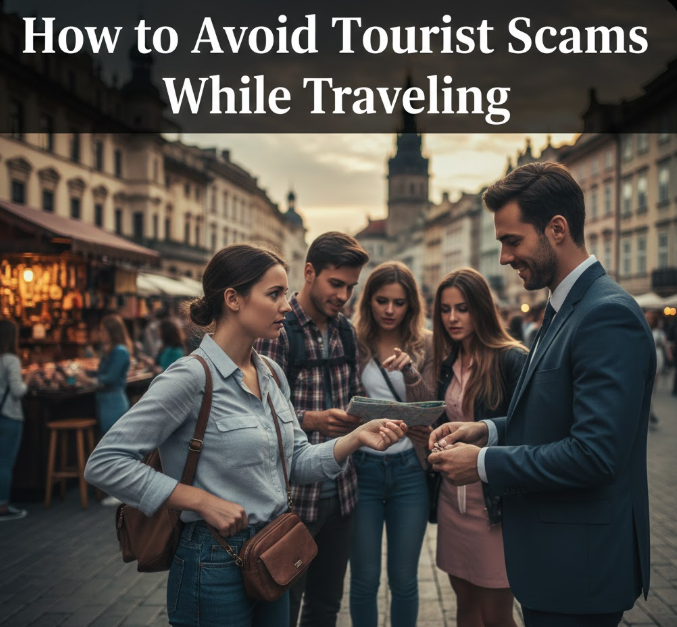
Real-Life Example: How Awareness Prevented a Scam
A traveler in Italy was approached by a man offering a “free tour” near a busy piazza. She politely declined and instead went to the official tourist office. The man later attempted to distract tourists to steal their bags. Because she trusted her instincts, she avoided losing her belongings.
Final Thoughts
Tourist scams are common, but they don’t have to ruin your trip. Awareness, planning, and smart choices are your best defense.
Key Takeaways:
- Research your destination thoroughly
- Use official services and trusted guides
- Keep valuables secure and stay alert
- Trust your instincts above all
By following this checklist, you can enjoy your travels safely and confidently.