

Bringing a puppy home is exciting—but it comes with responsibility. Training your puppy early is essential to develop good behavior, prevent accidents, and build a strong bond. Puppies are like little sponges; they learn fast but need consistency, patience, and positive reinforcement.
This guide provides a step-by-step method to train your puppy at home, covering everything from potty training to obedience commands.
Why Training Your Puppy Matters
Proper training ensures:
- A well-behaved dog that follows commands
- Reduced destructive behavior
- Safe socialization with people and other pets
- Stronger bond and trust between owner and puppy
Training isn’t just about rules—it’s about communication and understanding your puppy’s needs.
Step 1: Set Up Your Puppy’s Space
Creating a safe, designated area helps your puppy feel secure.
- Use a crate or playpen for sleeping and resting
- Provide a soft bed, toys, and water
- Keep the area puppy-proofed: remove small objects, toxic plants, or cords
Tip: Crates aren’t punishment—they’re a safe “den” that aids potty training.
Step 2: Establish a Routine
Puppies thrive on consistency. A clear daily schedule helps them learn faster.
Daily Routine Includes:
- Feeding times (2–3 times a day for young puppies)
- Bathroom breaks (after meals, naps, and play)
- Playtime and exercise
- Training sessions (short and frequent)
Example:
| Time | Activity |
|---|---|
| 7:00 AM | Breakfast + potty break |
| 8:00 AM | Short training session |
| 12:00 PM | Lunch + potty break |
| 1:00 PM | Nap/playtime |
| 5:00 PM | Exercise/walk |
| 7:00 PM | Dinner + potty break |
| 9:00 PM | Wind down + bedtime |
Step 3: Potty Training
One of the first things every puppy must learn is where to relieve themselves.
Steps for Potty Training:
- Take your puppy outside frequently
- First thing in the morning, after meals, naps, and play
- Pick a designated potty spot
- Consistency helps puppies associate the spot with bathroom needs
- Reward immediately after they go in the right place
- Treats, praise, or petting works well
- Watch for signs they need to go
- Sniffing, circling, whining
- Never punish accidents
- Clean thoroughly to remove scent
Tip: Puppies have small bladders; expect accidents and remain patient.
Step 4: Basic Commands
Teaching basic obedience commands sets the foundation for good behavior.
Key Commands to Teach:
- Sit – Hold a treat above the puppy’s head, move it back, say “sit,” reward when they sit
- Stay – Have the puppy sit, say “stay,” step back slowly, reward for staying in place
- Come – Call the puppy’s name, say “come,” reward when they approach
- Down – Use a treat to guide them to lie down, reward immediately
- Leave it – Show a treat, say “leave it,” reward when they ignore it
Tips for Command Training:
- Keep sessions short (5–10 minutes)
- Use positive reinforcement, not punishment
- Repeat consistently each day
Step 5: Socialization
Proper socialization prevents fear or aggression later.
Steps to Socialize a Puppy:
- Introduce your puppy to different people, environments, and sounds
- Arrange playdates with other vaccinated, friendly dogs
- Expose them to car rides, stores, and outdoor walks
Tip: Positive experiences at a young age shape confident adult dogs.
Step 6: Crate Training
Crate training helps with potty training and provides a safe space.
Steps:
- Make the crate inviting with a blanket and toys
- Encourage your puppy to enter voluntarily with treats
- Start with short periods (10–15 minutes)
- Gradually increase duration
- Never use the crate as punishment
Tip: Puppies should not stay in crates for more than a few hours at a time.
Step 7: Chewing and Teething
Puppies naturally chew to relieve teething pain.
How to manage chewing:
- Provide chew toys and rotate them
- Redirect from furniture or shoes to toys
- Praise the puppy when they chew appropriate items
Tip: Bitter sprays can discourage inappropriate chewing.
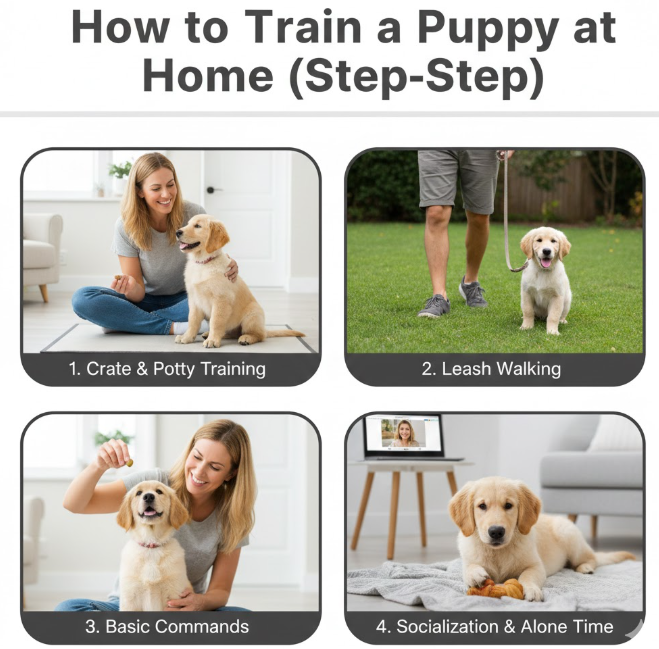
Step 8: Leash Training
Walking politely on a leash is essential for safe outdoor exploration.
Steps:
- Introduce the leash and collar indoors first
- Let the puppy walk around with it on
- Reward calm behavior while walking
- Teach “heel” or “let’s go” commands for control
Tip: Start with short walks to avoid overwhelming your puppy.
Step 9: Positive Reinforcement
Positive reinforcement builds trust and encourages good behavior.
Examples:
- Treats for sitting or coming
- Praise for potty training successes
- Toys for calm behavior
Avoid Punishment:
- Yelling or hitting can create fear and anxiety
- Focus on rewarding good behavior and redirecting bad behavior
Step 10: Consistency and Patience
Training a puppy takes time and repetition.
Guidelines:
- Practice commands daily in short sessions
- Keep all family members using the same commands and rules
- Celebrate progress and be patient with setbacks
Quick Puppy Training Checklist
| Training Area | Daily Action |
|---|---|
| Potty Training | Take puppy outside every 2–3 hours |
| Basic Commands | 5–10 min training sessions |
| Socialization | Introduce new people, dogs, and environments |
| Crate Training | Short periods with positive reinforcement |
| Chewing | Provide toys and redirect inappropriate chewing |
| Leash Training | Short indoor and outdoor walks |
Bonus Tips for 2026 Puppy Owners
- Use clicker training for precise reinforcement
- Keep vaccinations and vet visits up to date for safety
- Use apps to track feeding, potty breaks, and training progress
- Be mindful of mental stimulation – puzzles, obedience games, and scent games
- Take photos and videos to track growth and milestones
Final Thoughts
Training a puppy at home is rewarding and builds a lifelong bond. With consistency, patience, and positive reinforcement, your puppy can learn:
- Good manners
- Obedience commands
- Socialization skills
- Confidence and independence
Remember: puppies are learning every day. Small, consistent steps make the biggest impact. Start early, practice daily, and celebrate every success—you’ll have a well-behaved, happy companion in no time.