

Just like humans, dogs go through a stage of life where their needs change. After around age 7, many dogs enter their senior years. While every dog ages differently depending on breed and size, this stage often brings changes in mobility, diet, health, and behavior. Proper care during this time can extend their life, improve quality of life, and keep them happy and active.
This guide covers everything you need to know about caring for a senior dog, step by step.
Why Senior Dog Care Matters
As dogs age:
- Their metabolism slows down
- Joints and muscles weaken
- Immune systems become less efficient
- Cognitive function can decline
Providing specialized care ensures:
- Reduced risk of chronic illness
- Maintained mobility and comfort
- Healthy weight and digestion
- Continued mental stimulation
1. Adjust Their Diet
Nutrition is key for aging dogs. Senior dogs often need fewer calories but more nutrients.
Changes to Consider:
- Lower calorie intake – Senior dogs may gain weight more easily
- High-quality protein – Supports muscle maintenance
- Joint support – Omega-3 fatty acids help with arthritis
- Digestive health – Fiber can improve bowel movements
Tip: Consult your vet for senior dog food recommendations. Avoid sudden diet changes.
2. Maintain a Healthy Weight
Extra weight puts stress on joints, heart, and organs.
Tips:
- Monitor body condition weekly
- Adjust portions as activity decreases
- Use low-calorie treats
- Encourage moderate exercise
Example: A 50-pound dog should maintain a lean physique without visible fat rolls.
3. Exercise and Mobility
Senior dogs still need activity, but intensity and duration may need adjustment.
Recommended Activities:
- Shorter, more frequent walks
- Gentle play and swimming (easy on joints)
- Low-impact exercises like stair-free fetch
Tip: Watch for stiffness, limping, or reluctance to move—these may indicate arthritis or joint pain.
4. Regular Vet Checkups
Older dogs are more prone to chronic conditions such as:
- Arthritis
- Kidney disease
- Heart disease
- Diabetes
- Dental problems
Vet Visit Guidelines:
- Twice a year for senior dogs
- Include blood work, urine tests, and dental exams
- Discuss supplements for joints, heart, or cognitive health
5. Dental Care
Dental health affects overall health in senior dogs.
Tips:
- Brush teeth 2–3 times per week
- Provide dental chews and toys
- Schedule professional cleaning if necessary
Poor dental health can lead to heart, kidney, and liver problems.
6. Joint and Bone Support
Arthritis and joint stiffness are common after age 7.
Ways to Help:
- Supplements: Glucosamine and chondroitin
- Omega-3 fatty acids (fish oil)
- Comfortable bedding to reduce pressure on joints
- Avoid slippery floors with rugs or mats
Tip: Gentle massage can improve blood flow and reduce stiffness.
7. Monitor Cognitive Health
Senior dogs may experience slower learning, confusion, or changes in sleep patterns. This is called canine cognitive dysfunction.
Signs to Watch For:
- Disorientation in familiar spaces
- Forgetting commands or routines
- Changes in sleep-wake cycles
- Anxiety or restlessness
Supportive Measures:
- Mental stimulation with puzzle toys or scent games
- Consistent daily routines
- Use treats and praise for cognitive exercises
8. Grooming and Skin Care
Aging skin and coat need extra attention.
- Brush coat regularly to reduce shedding and mats
- Check skin for lumps, bumps, or infections
- Bathe only as needed to avoid drying skin
- Moisturizing shampoos or supplements for skin health
Tip: Regular grooming helps detect health issues early.
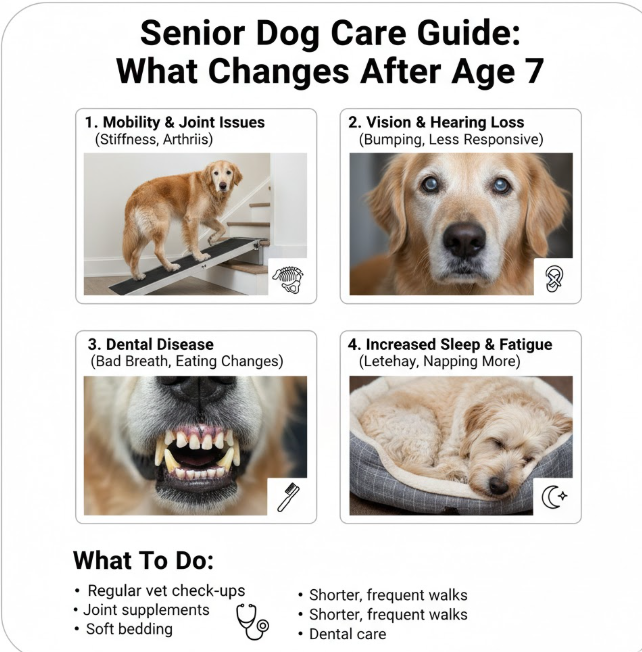
9. Eye and Ear Care
Senior dogs are prone to vision and hearing changes.
Eye Care:
- Cloudiness may indicate cataracts
- Redness or discharge may signal infection
Ear Care:
- Clean ears weekly with vet-approved solution
- Watch for odor or swelling
- Hearing loss is common—use gestures or vibrations to communicate
10. Comfort and Environment
Make your home senior-dog friendly:
- Soft bedding for joints
- Ramps instead of stairs
- Easy access to food, water, and favorite resting spots
- Temperature control (older dogs may feel cold more easily)
Tip: Avoid rough play that could cause injury.
11. Emotional Well-Being
Senior dogs still need attention, love, and mental stimulation.
- Spend quality time with gentle play
- Maintain daily routines for security
- Talk, pet, and include them in family activities
Tip: A calm, predictable environment reduces anxiety in older dogs.
Quick Table: Senior Dog Care Checklist
| Area | Key Actions |
|---|---|
| Diet | High-quality senior food, controlled calories, joint support |
| Weight | Monitor weekly, adjust portions, low-calorie treats |
| Exercise | Gentle walks, swimming, low-impact play |
| Vet Visits | Twice a year, blood work, dental checkups |
| Dental Care | Brush teeth, dental chews, professional cleaning |
| Joints | Supplements, comfortable bedding, massage |
| Cognitive Health | Mental stimulation, consistent routines |
| Grooming | Brush coat, check skin, bathe as needed |
| Eyes & Ears | Clean ears, watch for cloudiness or discharge |
| Environment | Ramps, accessible food/water, comfortable bedding |
Final Thoughts
Caring for a senior dog after age 7 is about adjusting lifestyle, diet, and environment to meet changing needs. By paying attention to:
- Nutrition and weight
- Joint and cognitive health
- Regular vet care
- Comfort and mental stimulation
…you can extend their life and improve quality of life.
Senior dogs still have a lot of love to give, and with the right care, their golden years can be happy, healthy, and comfortable.