

Pets may not speak, but they communicate their emotions in clear ways. Just like humans, stress can affect a pet’s health, behavior, and overall happiness. Recognizing stress early allows you to take steps to help your furry friend feel safe, calm, and loved.
This guide covers common signs of stress in pets, why it happens, and practical ways to help them cope.
Why Pets Get Stressed
Pets experience stress for various reasons, including:
- Environmental changes: Moving homes, renovations, or loud noises
- Separation: Being left alone for long periods
- Health issues: Pain, illness, or aging
- Social changes: New pets, visitors, or other animals
- Lack of stimulation: Boredom or insufficient exercise
Chronic stress can lead to behavioral issues, weakened immunity, and even physical illness, so early recognition is crucial.
Common Signs of Stress in Pets
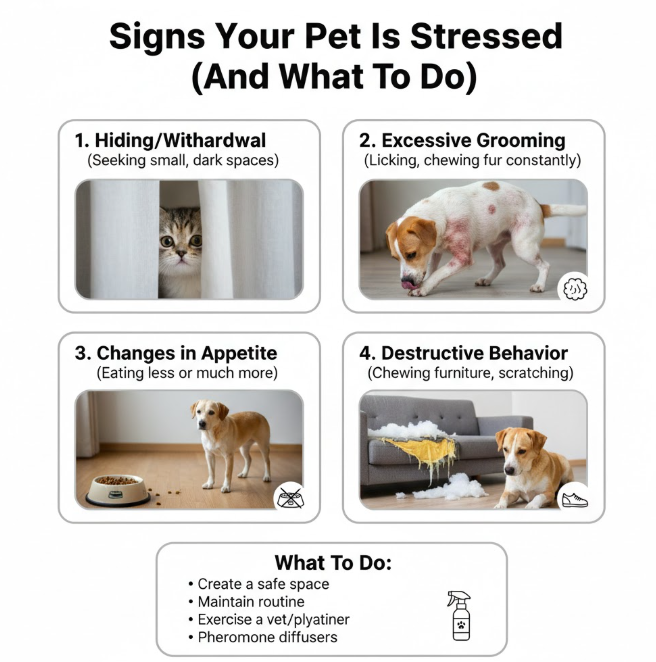
1. Changes in Appetite
- Eating less or refusing food
- Sudden overeating or scavenging
- Drinking more or less water than usual
💡 Tip: Changes in appetite can indicate stress or an underlying medical issue. Consult your vet if persistent.
2. Excessive Grooming or Scratching
- Cats may over-groom, causing bald spots
- Dogs may lick paws or coat excessively
- Skin irritation or hot spots may develop
💡 Tip: Over-grooming is often a coping mechanism for anxiety.
3. Aggression or Irritability
- Growling, snapping, or biting
- Barking or hissing more than usual
- Reacting negatively to familiar people or animals
💡 Tip: Stress can make normally calm pets defensive. Approach gently and give them space.
4. Withdrawal or Hiding
- Avoiding interaction with people or other pets
- Hiding under furniture or in corners
- Reduced interest in play or walks
💡 Tip: Sudden withdrawal can signal fear, anxiety, or illness. Observe behavior carefully.
5. Destructive Behavior
- Chewing furniture, shoes, or household items
- Scratching doors or walls
- Digging indoors
💡 Tip: Destructive behavior is often a sign of boredom, anxiety, or separation stress.
6. Vocalization Changes
- Increased barking, meowing, or whining
- Howling for long periods
- Sudden quietness if usually vocal
💡 Tip: Pay attention to unusual sounds—they often indicate discomfort or stress.
7. Changes in Bathroom Habits
- Urinating or defecating indoors despite being house-trained
- Constipation or diarrhea
- Marking territory more frequently
💡 Tip: Stress or anxiety can disrupt a pet’s normal bathroom routine.
8. Physical Signs
- Panting, trembling, or pacing
- Dilated pupils or pinned-back ears
- Drooling excessively or yawning repeatedly
💡 Tip: These physical cues often appear when pets feel threatened or anxious.
How to Help a Stressed Pet
1. Identify the Source of Stress
- Observe triggers (loud noises, new people, separation)
- Keep a log of behaviors to track patterns
- Rule out medical causes with a vet check-up
2. Provide a Safe Space
- Create a quiet corner or bed where your pet feels secure
- Use crates or covered beds for comfort (if your pet likes them)
- Ensure consistent access to food, water, and bathroom areas
3. Maintain Routine
- Feed, walk, and play at the same time every day
- Pets feel more secure with predictable schedules
- Avoid sudden changes in environment when possible
4. Encourage Exercise and Mental Stimulation
- Daily walks for dogs
- Play sessions with toys or puzzles
- Training sessions that reward positive behavior
💡 Tip: Mental and physical stimulation reduces boredom-related stress.
5. Use Calming Products
- Calming sprays, diffusers, or pheromone products
- Comfortable bedding and safe toys
- Soft music or white noise for anxious pets
💡 Tip: These products work best in combination with routine and attention.
6. Gradual Exposure to Stressors
- Introduce new experiences slowly
- Use positive reinforcement to reward calm behavior
- Avoid forcing pets into stressful situations
💡 Tip: Gradual exposure reduces fear and builds confidence over time.
7. Professional Help if Needed
- Consult a vet for medical causes or anxiety medications
- Consider a pet behaviorist or trainer for severe stress
- Early intervention prevents long-term behavioral problems
Quick Signs Checklist for Pet Stress
| Sign | What to Look For |
|---|---|
| Appetite | Loss of interest or overeating |
| Grooming | Excessive licking or hair loss |
| Aggression | Growling, biting, or irritability |
| Withdrawal | Hiding or reduced interaction |
| Destructive behavior | Chewing, scratching, digging |
| Vocalization | Unusual barking, whining, or meowing |
| Bathroom habits | Indoor accidents or sudden changes |
| Physical | Panting, trembling, pacing, dilated pupils |
Final Thoughts
Stress is a common issue for pets, but with observation, routine, and care, it can be managed effectively.
- Learn to read your pet’s body language and behavior
- Provide a safe, stable, and stimulating environment
- Seek veterinary or professional help when needed
By recognizing signs early and responding with care, you can keep your pet happy, healthy, and emotionally balanced.