

Practical Tips to Calm Your Mind and Feel More in Control
Anxiety is a normal part of life, but when it becomes constant or overwhelming, it can affect your sleep, focus, relationships, and overall happiness. The good news is that there are natural, simple ways to reduce anxiety without medication. With consistent effort, you can calm your mind, improve your emotional resilience, and feel more in control of your life.
This guide provides practical, beginner-friendly strategies that work in everyday life.
Understanding Anxiety
Anxiety is your body’s natural response to stress. It can appear as:
- Racing thoughts or overthinking
- Rapid heartbeat or tension
- Feeling restless or on edge
- Trouble sleeping
- Avoidance of situations
While occasional anxiety is normal, chronic anxiety can interfere with daily life.
1. Practice Deep Breathing
Deep breathing calms your nervous system and reduces the “fight-or-flight” response.
Simple Technique:
- Sit comfortably with your back straight.
- Inhale slowly through your nose for 4 seconds.
- Hold your breath for 4 seconds.
- Exhale slowly through your mouth for 6 seconds.
- Repeat for 5–10 minutes.
Tip: Practice daily or whenever you feel anxious.
2. Move Your Body Regularly
Exercise releases endorphins, improves mood, and lowers stress hormones.
Options:
- Walking or jogging
- Yoga or stretching
- Dancing to your favorite music
- Bodyweight exercises at home
Tip: Even 20–30 minutes a day can reduce anxiety over time.
3. Limit Caffeine and Sugar
Too much caffeine or sugar can trigger anxiety or panic-like symptoms.
- Replace energy drinks with herbal tea or water
- Choose whole foods over sugary snacks
- Notice how your body reacts to stimulants
4. Practice Mindfulness and Meditation
Mindfulness helps you focus on the present, rather than worrying about the future.
Simple Mindfulness Exercise:
- Sit quietly and close your eyes.
- Notice your breath and physical sensations.
- When thoughts arise, observe them without judgment and return to your breath.
- Do this for 5–10 minutes daily.
Tip: Apps like Calm or Insight Timer can guide beginners.
5. Maintain a Healthy Sleep Routine
Poor sleep worsens anxiety.
- Go to bed and wake up at the same time daily
- Avoid screens 1 hour before sleep
- Keep your bedroom cool, dark, and quiet
- Practice a bedtime ritual (reading, stretching, or meditation)
6. Limit Overthinking and Negative Self-Talk
Overthinking fuels anxiety. Combat it by:
- Asking: “Is this thought helpful?”
- Replacing negative thoughts with facts or solutions
- Journaling worries and letting them out of your mind
Tip: Write a “worry list” and review it once a day instead of letting thoughts repeat in your head.
7. Connect with Others
Social support reduces anxiety and improves resilience.
- Talk to friends or family about your feelings
- Join clubs, online communities, or support groups
- Avoid isolating yourself during stressful times
8. Spend Time in Nature
Natural environments have a calming effect on the brain.
- Take a walk in a park or near water
- Sit in the sun or under a tree
- Practice grounding exercises: feel the ground, smell fresh air, listen to birds
Even 10–15 minutes a day can help reduce stress hormones.
9. Practice Gratitude and Positive Thinking
Shifting focus from worries to positive aspects of life reduces anxiety.
- Write down 3 things you’re grateful for each day
- Reflect on small accomplishments
- Use affirmations like: “I am capable of handling challenges”
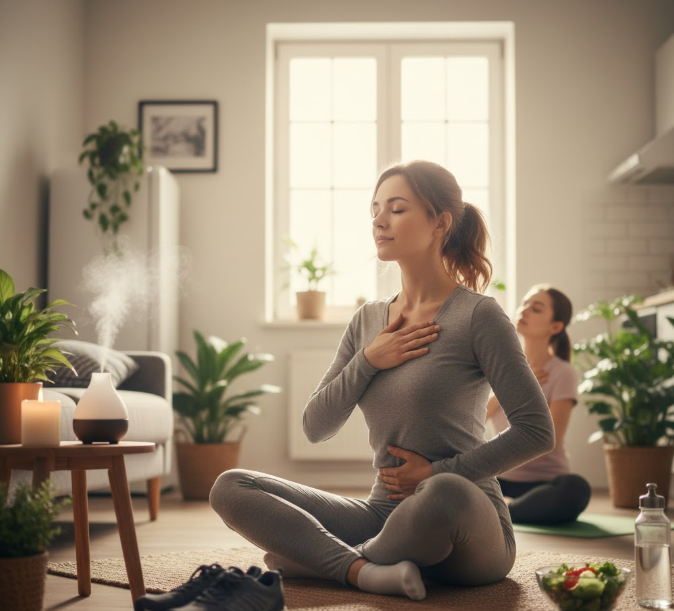
10. Try Natural Relaxation Techniques
Several techniques are simple and effective:
- Progressive muscle relaxation: Tense and release each muscle group
- Aromatherapy: Lavender or chamomile essential oils
- Warm baths: Soothes muscles and calms the mind
Table: Daily Anxiety-Reduction Routine
| Time of Day | Activity |
|---|---|
| Morning | 5–10 min meditation + light stretching |
| Afternoon | 20–30 min walk or exercise |
| Evening | Journal 5 worries + 3 gratitudes |
| Night | Screen-free winding down + deep breathing before sleep |
Quick Infographic: Top 5 Ways to Reduce Anxiety Naturally
1. Deep breathing
2. Regular exercise
3. Mindfulness & meditation
4. Limit caffeine & sugar
5. Connect with supportive people
When to Seek Professional Help
Natural methods are effective for mild to moderate anxiety. Seek professional help if:
- Anxiety persists daily and affects work, school, or relationships
- Panic attacks occur frequently
- Sleep problems or physical symptoms worsen
Therapists can offer cognitive behavioral therapy (CBT), exposure therapy, or other strategies to manage anxiety long-term.
Final Thoughts: Calm Your Mind, Take Control
Reducing anxiety naturally is about small, consistent changes:
- Breathe deeply and exercise daily
- Focus on the present, not imagined problems
- Build a support network and connect with nature
- Maintain healthy routines for sleep, food, and mindfulness
You don’t have to eliminate anxiety completely — just manage it so it doesn’t control your life. Start applying these strategies today, and over time, your mind will feel calmer, more focused, and more resilient.