

The Man Who Swept the Steps
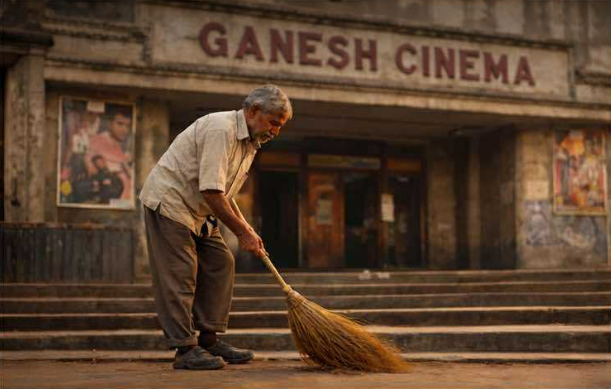
Every morning before the city remembered itself, before horns learned how to shout and shopkeepers lifted their metal shutters with tired grunts, Arun Malhotra swept the steps of the old Ganesh Cinema Hall.
The cinema hadn’t shown a movie in years. Its walls were cracked like dried riverbeds, its faded posters peeling into ghostly faces of actors long forgotten. But the steps remained, wide and shallow, gathering dust, leaves, and the careless footprints of passersby.
Arun swept them anyway.
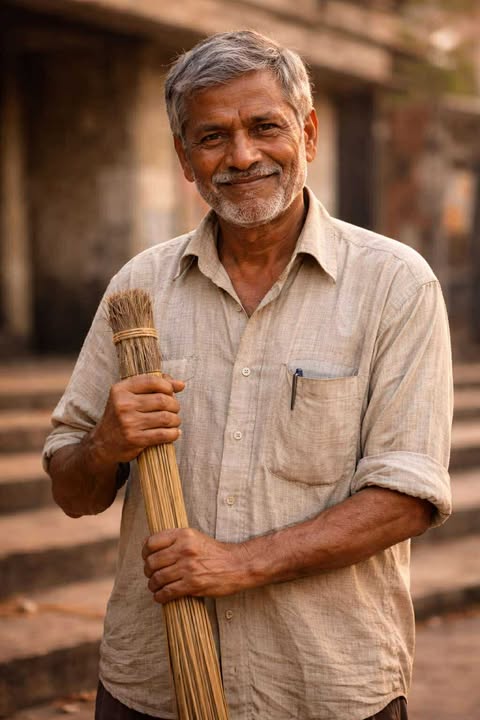
He was fifty-six years old, thin as a folded newspaper, with silver threading his hair and hands permanently rough from work. He earned barely enough to pay rent for a single room behind the textile market. Still, he came every morning, sweeping not because anyone asked him to, but because once—long ago—someone had told him the steps looked better clean.
That someone was his wife, Meera.
She had died twelve years earlier.
People in the neighborhood called Arun strange. Some thought he was slow. Others believed he swept the steps because he hoped the cinema would reopen and he’d be hired as a watchman. No one knew the truth, and Arun never corrected them.
After sweeping, he sat on the steps and drank tea from a chipped steel cup, watching the sun climb like a tired worker reporting for duty. This was how his days began. And this was how karma quietly noticed him.
Small Kindnesses No One Counts
Arun’s life was made of small things.
He gave half his lunch to the stray dog with one cloudy eye. He helped old Mrs. Fernandes carry her groceries even when his knees ached. He repaired broken stools for shopkeepers without charging more than the cost of nails. When children fell and scraped their knees, he wiped blood with the edge of his own shirt.
He never announced these acts. He never waited for thanks.
To Arun, kindness was not currency. It was habit.
Once, during the monsoon, a boy collapsed outside the tea stall near the cinema. People stepped around him, afraid of trouble. Arun knelt, lifted the boy into his arms, and carried him through rain to the government hospital.
The boy vomited on him.
The nurse scolded him.
The doctor barely nodded.
Arun returned home soaked, shivering, and exhausted. No miracle followed. No reward arrived. The next morning, he still swept the steps.
The Man Who Fell
One afternoon, the city trembled under heat. The air shimmered, and even the flies seemed tired of buzzing.
A black car pulled up near the cinema hall.
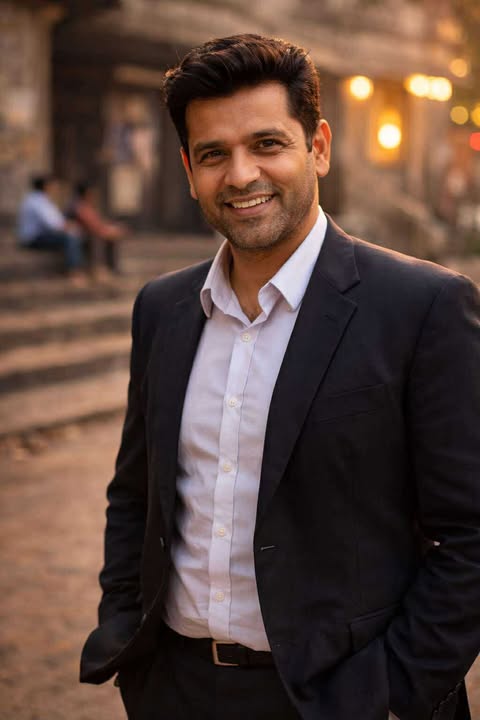
It was sleek, polished, and wildly out of place among the bicycles and rusted scooters. From it emerged a man in his early forties wearing an expensive suit that clung uncomfortably in the heat.
He climbed the steps, phone pressed to his ear, arguing loudly.
“I told you, close the deal,” he snapped. “I don’t care how—”
Then his foot slipped.
The step, freshly swept but still dusty, betrayed him.
The man tumbled forward, landing hard, his phone skittering across the ground. His ankle twisted with a sickening sound.
He screamed.
People stared. Some laughed. A few recorded videos.
Arun dropped his broom and ran.
He knelt beside the man, ignoring the curses being hurled his way.
“Sir, don’t move,” Arun said gently. “Your ankle—”
“Get away!” the man barked, sweating and furious. “Don’t touch me!”
Arun hesitated, then calmly removed his own faded scarf and wrapped it tightly around the injured ankle.
“This will help until we reach a doctor.”
“I said don’t—”
But the pain overruled pride.
Arun hailed an auto, helped the man inside, and rode with him to a private clinic two kilometers away, paying the fare himself.
At the clinic, the man—whose name was revealed as Raghav Khanna, CEO of a large real estate firm—was treated for a fracture.
Raghav did not thank Arun.
He did not ask his name.
When Arun quietly left, his shirt stained with dust and sweat, Raghav barely noticed.
But karma did.
The Storm That Followed
Two weeks later, Raghav Khanna’s life collapsed.
A deal fell through. A partner betrayed him. A regulatory investigation froze his accounts. Newspapers splashed his face across front pages with words like fraud, mismanagement, and collapse.
His phone rang endlessly—creditors, lawyers, reporters. His wife took their daughter and left for her parents’ home. His friends vanished like smoke.
Raghav, once surrounded by luxury and control, found himself alone in a rented apartment, staring at a city that no longer bowed to him.
One evening, his car broke down near the old Ganesh Cinema Hall.
He stepped out, furious and exhausted, and recognized the cracked walls, the faded posters, and—
The man sweeping the steps.
For the first time, Raghav truly saw him.
Recognition
“You,” Raghav said, walking closer. “You helped me.”
Arun looked up, squinting. Then he smiled politely.
“Yes, sir. Your ankle. Is it healed?”
Raghav nodded slowly. “You never took my name.”
“No need,” Arun replied. “You were hurt.”
Something in that simple sentence unsettled Raghav more than any headline had.
“Why do you still sweep these steps?” Raghav asked.
Arun shrugged. “They are here every day. So am I.”
Raghav laughed bitterly. “You know this place is worthless, right? The land alone—”
“It is not worthless,” Arun said softly. “People rest here. Children sit here. Once, people dreamed here.”
Raghav fell silent.
He sat beside Arun on the steps.
For the first time in years, he listened.
Seeds Beneath the Dust
Over the next few weeks, Raghav returned often.
At first, he told himself it was coincidence. Then he admitted the truth: something about the old man’s quiet presence steadied him.
They talked.
Arun spoke of Meera, of loss, of finding meaning in routine. Raghav spoke of ambition, of fear, of the emptiness that success had failed to fill.
One evening, Raghav asked, “Aren’t you angry at the world? It’s given you so little.”
Arun smiled. “The world gives what it knows we need, not what we ask for.”
Those words stayed with Raghav. Karma was working—slowly, deliberately.
A Choice
Months passed.
Raghav fought his legal battles honestly. He accepted losses. He admitted mistakes. The investigation cleared him of fraud, though his empire remained in ruins.
One morning, standing outside the cinema hall, Raghav said, “I want to buy this place.”
Arun looked surprised. “Why?”
“Because it still stands,” Raghav replied. “And because someone cared for it when no one else did.”
Raghav bought the building—not to demolish it, but to restore it.
He hired local workers. He paid fair wages. He reopened the cinema as a community arts center—free screenings, children’s workshops, evening lectures.
And he insisted on one condition.
Arun Malhotra would be the caretaker.
With a salary that allowed dignity, not charity.
Ripples
The change spread.
The stray dog was adopted by a family who attended film nights. Mrs. Fernandes taught cooking classes at the center. Young people found a place to create instead of drift.
Raghav’s daughter visited. She laughed in the halls her father had saved instead of sold.
Reporters returned—but this time with different headlines.
“Fallen Tycoon Rebuilds Community Space.” Raghav never corrected them.
He knew the truth.
The Day the Steps Were Full
On the anniversary of the center’s reopening, the steps of Ganesh Cinema Hall were crowded.
Children. Elderly couples. Artists. Vendors.
Arun stood with his broom, unsure.
Raghav walked up and gently took it from his hands.
“Today,” Raghav said, “you don’t sweep.”
“Then who will?” Arun asked.
Raghav gestured to the crowd.
They all stepped forward, laughing, and swept together.
Arun’s eyes filled with tears.
Meera would have liked this, he thought.
The Quiet Reward
Years later, when Arun passed away peacefully in his sleep, the city paused.
The steps were covered in flowers.
Raghav stood among the crowd, older, humbler, grateful.
He placed Arun’s broom beside the entrance—not as decoration, but as reminder.
That kindness, even unnoticed, carries weight.
That karma does not rush.
That sweeping steps can change a life.
And sometimes, many lives.
Epilogue: What Karma Knows
Karma is not thunder.
It is not instant.
It is the quiet remembering of the universe.
Of who lifted whom. Of who gave without asking. Of who swept the steps when no one was watching.
And it always, always finds its way home.
Happy endings do not arrive loudly. They arrive honestly.
Share with your friends and family.